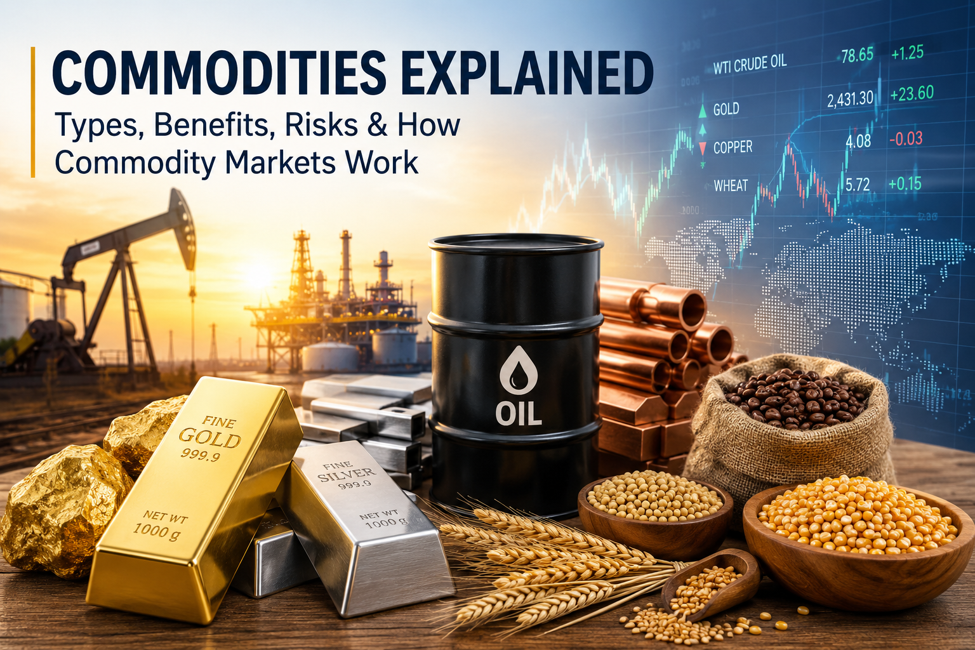
Commodities Explained: Types, Benefits, Risks & How Commodity Markets Work
Commodities are among the tradable assets in the world, yet they remain highly relevant to modern investors, businesses and economies. From oil and natural gas to gold, wheat, copper and coffee, commodities are connected to everyday life in ways that are easy to overlook. When fuel prices rise, food becomes expensive or industrial metals experience a supply shortage, commodity markets are often at the center of the story. These markets help producers manage price uncertainty, businesses secure raw materials, and investors gain exposure to assets that can behave differently from traditional stocks and bonds.
However, commodities are not simply another investment category. Their prices can change rapidly because of weather, geopolitical developments, economic growth, currency movements, inventories, production levels and shifts in consumer demand. Futures and other derivatives can add another layer of complexity and risk. The U.S. Commodity Futures Trading Commission (CFTC), for example, warns that futures and options can be volatile, complex and unsuitable for individual investors. This guide from Moneyminnd explains commodities from the ground up, including what they are, the major types, how commodity markets work, potential benefits, key risks, common ways to gain exposure, and important concepts every beginner should understand.
What Are Commodities?
Commodities are standardized materials or primary agricultural products that can be bought and sold in markets. Unlike a company’s stock, which represents an ownership interest in a business, a commodity generally represents a resource or product.
Examples include:
● Gold and silver
● Crude oil and natural gas
● Copper and aluminum
● Wheat, corn and soybeans
● Coffee, sugar and cocoa
● Livestock such as cattle and hogs
The defining feature of a commodity is standardization. A standardized commodity can be traded because buyers and sellers generally agree on characteristics such as grade, quality, quantity and delivery terms. For example, an industrial manufacturer does not necessarily need to negotiate a new definition of copper every time it purchases the metal. Standardized specifications make large-scale trading possible.
Commodity prices are largely influenced by the relationship between supply and demand. When available supply falls while demand remains strong, prices can rise. When production increases faster than consumption, prices may come under pressure. However, real-world commodity pricing is more complicated because inventories, transportation, storage, seasonality, currency movements, government policies and expectations about conditions can all influence the market.
How Do Commodity Markets Work?
Commodity markets bring together producers, consumers, traders, investors, financial institutions and other market participants. At the level, the process revolves around a physical commodity and its price. Consider a wheat farmer. The farmer may be concerned that wheat prices could fall between planting and harvest. A futures market can provide a way to manage that uncertainty by allowing the farmer to sell a futures contract before the crop is harvested.
On the other hand, a food manufacturer may worry that wheat prices will increase. It may use futures to manage the risk of input costs. This is known as hedging. According to the CFTC, futures markets allow commodity producers and consumers to manage the risk created by changing commodity prices. Not everyone in the market is trying to hedge a business. Some participants are speculators who seek to profit from price movements without intending to take delivery of the commodity.
This creates a relationship:
Producers and consumers often use markets to manage price risk while traders and investors may use them to seek returns or portfolio exposure.
Spot Markets
A spot market involves buying or selling a commodity for near-immediate delivery. For example, a business purchasing physical copper for manufacturing may negotiate a cash price based on market conditions, quality, location, transportation, and other factors. The spot price therefore reflects the value of the commodity at or around the time.
Futures Markets
A futures contract is an agreement to buy or sell a commodity at a future date under standardized contractual terms. The price is agreed upon when the contract is entered, although the market value of the contract can change continuously afterward. Importantly, entering a futures contract does not necessarily mean the trader will eventually receive a truckload of oil, grain, or metal. Many contracts are closed before expiration. Some are cash-settled. The CFTC notes that most futures contracts are liquidated before delivery. This is one reason futures markets can be useful but also complicated for investors.
Major Types of Commodities
Commodities are generally divided into broad categories. Each group has its supply-and-demand characteristics and can respond differently to economic events.
1. Energy Commodities
Energy is one of the actively followed areas of the commodity market.
Common examples include:
● oil
● Natural gas
● Gasoline
● Heating oil
● Other refined petroleum products
Energy prices can have a broad economic impact because fuel is used for transportation, manufacturing, electricity generation, heating and logistics. Crude oil is particularly interconnected with the economy. Changes in oil prices can influence transportation costs, production expenses, inflation expectations and consumer spending. Supply can be affected by production decisions, inventories, infrastructure constraints, technological developments and geopolitical events. Demand can change with growth, industrial activity, transportation needs and seasonal patterns.
2. Precious Metals
Precious metals include:
● Gold
● Silver
● Platinum
● Palladium
Gold is perhaps the most well-known precious metal among investors. It has both investment applications, while silver is also heavily connected to industrial demand. Precious metals can respond to forces more than agricultural commodities. Inflation expectations, interest rates, currency movements, investment demand, industrial activity, and broader market sentiment can all influence prices. Gold is sometimes viewed as a defensive asset during periods of financial uncertainty, but that does not mean its price always rises when markets are under pressure. Like any market-traded asset, it can experience price fluctuations.
3. Industrial Metals
Industrial metals are inputs for construction, manufacturing, transportation, infrastructure and technology.
Examples include:
● Copper
● Aluminum
● Nickel
● Zinc
● Lead
Copper is particularly important because it is widely used in equipment, construction, power infrastructure and industrial applications. Industrial metals are often sensitive to growth. Strong manufacturing and construction activity can increase demand while a slowdown can reduce consumption. Supply conditions matter as well. Mining capacity, production disruptions, inventories, transportation, and investment in projects can affect availability.
4. Agricultural Commodities
Agricultural commodities include products such as:
● Wheat
● Corn
● Soybeans
● Rice
● Coffee
● Sugar
● Cocoa
● Cotton
Agricultural markets have a characteristic: production often follows biological and seasonal cycles. A drought, flood, frost, rainfall, pest outbreak, or other weather event can affect crop yields. Because supply cannot always be increased, a change in expected production immediately can have an impact on prices. The agricultural market therefore requires investors to pay attention to planting conditions, crop development, harvest expectations, inventories, exports and weather patterns.
5. Livestock Commodities
Livestock markets include products such as:
● Cattle
● Feeder cattle
● Lean hogs
These markets are influenced by animal supply, feed costs, consumer demand, disease conditions, weather, processing capacity and broader economic trends. For example, changes in grain prices can affect livestock producers because feed represents an input cost. This demonstrates a feature of commodities: different markets can be connected to one another.
What Drives Commodity Prices?
Understanding price drivers is more important than memorizing commodity names. Supply and Demand: Supply and demand are the foundation of commodity pricing. If demand rises while supply remains limited, prices may increase. If supply expands while demand remains weak, prices may decline. Commodity supply and demand can be difficult to predict because production often depends on factors outside a producer’s immediate control. For commodities, weather can dramatically change expected production. For energy markets, production decisions and geopolitical developments can alter supply. For metals, mining capacity and economic activity can influence both sides of the market.
Weather
Weather can be especially important for markets. A favorable growing season can increase expected harvests. Potentially put downward pressure on prices. Severe weather can have the opposite effect. Weather can also influence energy demand. Cold or hot conditions may increase demand for heating or electricity.
Geopolitical Events
Commodity markets are highly sensitive to developments because many raw materials are produced, processed, transported and consumed across international borders. Wars, sanctions, trade restrictions, production disruptions, shipping problems and changes in government policy can affect supply expectations. The impact can sometimes extend well beyond the commodity directly involved. For example, an energy supply disruption can affect transportation and manufacturing costs, potentially influencing inflation across the economy.
Economic Growth
Economic activity influences demand for commodities. During periods of economic growth, manufacturers may require more metals, transportation may consume more fuel, and construction activity may increase. During slowdowns, demand for industrial commodities may weaken. However, not every commodity responds identically. Gold, for example, has investment-related demand that can behave differently from demand for construction metals.
Interest Rates and Inflation
Interest rates can influence commodity markets through channels. Higher rates can affect borrowing costs, currency values, economic activity, and investor behavior. Changes in inflation expectations can also influence demand for commodities. Commodities are sometimes talked about as ways to protect against inflation because their prices can go up when the prices of things and materials used in making things go up. However, this connection is not always true all the time. Investors should not think that commodities will always do better when inflation goes up.
Currency Movements
Many commodities that are traded around the world are priced in U.S. Dollars. When the dollar changes in value it can affect how much international buyers can buy. It can change the prices of commodities. Currency changes are therefore another thing investors might need to think about when looking at the commodity markets.
What Are the Benefits of Investing in Commodities?
Commodities can have roles in an investment plan but whether they are right for someone depends on their goals, how much risk they can handle, how long they plan to invest and how they want to invest.
Portfolio Diversification
One possible benefit is to have a mix of investments. Stocks and bonds are affected by things like company profits, interest rates, how easy it is to get credit, and how the economy is doing. Commodities have their reasons for changing in price. Since these reasons are different, being involved with commodities can sometimes act differently from investments. Still, having a mix does not stop losses. The prices of commodities can drop a lot, and how different types of investments act together can change when things get tough in the market.
Potential Inflation Protection
Commodities are very connected to the prices of things and materials used to make things. When inflation goes up because things like materials, energy, food, or other parts get more expensive, some commodities might also go up in price. This is why some people think commodities can help protect against inflation. CME Group says that commodities can provide a way to help protect investments from some kinds of rising prices. Still, investors should see this as a benefit, not a sure thing.
Exposure to Global Economic Activity
Commodities let people take part in trends that are linked to how much the world uses and makes things. For example, more building work can help demand for metals used in construction. More travel can affect how much fuel is used. Changes in how much food’s needed can affect the prices of crops. This makes commodities interesting for people who want to be involved with the side of the economy.
Potential Opportunities During Supply Shortages
Commodity markets can react a lot when the supply of something becomes limited. A big problem in production can cause a shortage, which might make prices go up. However, trying to guess these events to make money is very hard. The same changes that create chances can also cause losses.
What Are the Risks of Commodities?
The possible benefits come with risks.
High Price Volatility
Commodity prices can change fast. A sudden change in how much is available, political situations, weather reports, how much is stored or how people feel about the economy can cause big changes in prices. The SEC has said that the prices of commodities and futures can be very unstable and affected by things including how much is available and needed by government rules, political events, weather, interest rates, changes in money values, and what people think.
Leverage Risk
This is one of the risks for people who are new. Futures contracts usually need traders to put down some money by paying the whole amount for the thing they are trading. This setup can create leverage. A small change in the market can create a bigger gain or loss compared to the money that was put in. The CFTC warns that people trading futures can lose all their money and in some cases might have to pay more than they first put in. Because of this, trading futures should not be seen as a way to make more money.
Storage and Carrying Costs
Physical commodities create costs. Gold needs to be kept. Crops need storage. Oil and other things need places and ways to move. These costs can affect how current prices and future prices are connected. In futures markets, the costs to keep things and the time value of money can be part of how future prices are set.
Contango and Backwardation
Two important words for people investing in commodities are contango and backwardation. Contango is when future prices are higher than the current price. Backwardation is when future prices are lower than the current price. These situations can change over time based on how much’s stored, how much is available, how much it costs to keep things, and what people expect. This is important for people who get their commodity exposure through funds that keep changing their contracts. The performance of the investment can be different from looking at the current price of the thing. CME Group says that current and future prices can move differently over time and that their connection can be affected by things like storage and when things are needed.
How Can Investors Gain Exposure to Commodities?
Investors don’t have to buy amounts of oil or store bags of crops to get involved with commodities. There are ways.
Physical Commodities
Some commodities can be bought directly. Gold and silver are examples. Owning these can give access, but people need to think about where to keep them, how to protect them, how to be sure they are real, how much it costs to buy and sell, and how easy it is to sell them.
Commodity Futures
Futures give access through set-up contracts. They are often used by companies to protect themselves and by traders to bet on prices. Futures need a good understanding of how much money is needed, what the contract says, when it ends, how to settle, and how to manage risks. They are harder than buying an investment fund. The CFTC says that people should know their money, what they owe, and what could go wrong before trading futures or options.
Commodity ETFs and Funds
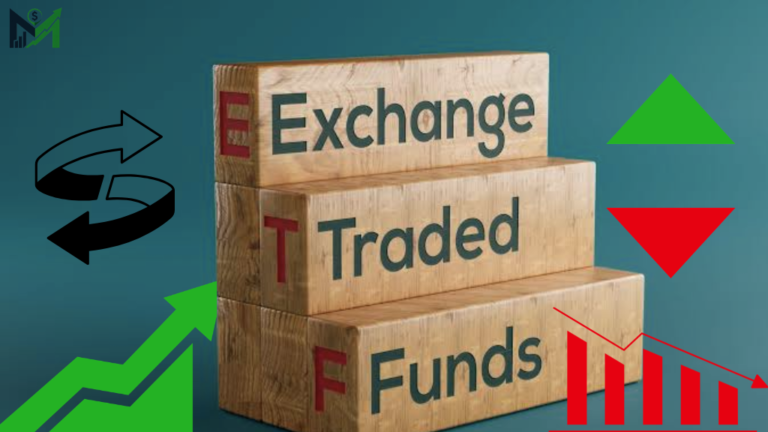
Funds that focus on commodities can help people get into some markets easily. Depending on the fund, the way they get involved can be through items, future contracts, shares of companies that work with commodities, or a mix of ways. This is important. A fund that owns gold bars is not the same as a fund that owns companies that dig for gold. Also, a fund that uses contracts might have returns affected by future market conditions instead of just matching the current price. Investors should read what the fund does, how much it costs, what it owns, and what the risks are before they invest.
Commodity-Related Stocks
Another way is to invest in companies that deal with commodities. Examples include companies that dig for gold, oil companies, farms, and other businesses that work with resources. This is not the same as owning the thing. A company that mines gold can be affected by the price of gold. It is also influenced by how the company is run, how much it costs to operate, how much debt it has, how much it spends, political situations, risks related to the company, and how the whole stock market is doing.
Commodities vs Stocks and Bonds
Commodities are different from stocks and bonds. A stock is like owning a part of a company. It can make money from growing in value. Sometimes from payments made by the company. A bond is like lending money to someone and getting interest and getting the money back. A commodity is a resource or crop whose value is mostly based on how much is available, how much is needed, how much is stored, how much is made, how much is used, and other real-life things. This difference is why commodities can sometimes help mix up an investment. Still, they don’t usually give money like stocks that pay dividends or bonds that pay interest. So someone needs to know what is making the money before they choose an investment.
Hedging vs Speculation in Commodity Markets
Two ideas come up a lot in commodity markets: hedging and speculation.
Hedging
A hedge is meant to reduce the effect of a price change. Imagine a farmer who expects to sell wheat after it’s ready. If the price of wheat goes down before the crop is sold, the farmer might get less money. Using futures could help balance some of that price risk. Similarly, a company that needs a lot of material might use contracts to reduce uncertainty about costs. The goal is not to make the money but to manage the uncertainty.
Speculation
Speculators take positions because they think prices will change. For example, someone might think that copper prices will go up and take a bet that will make money if that happens. Speculation helps make the market have more people trading. It brings big risks. The CFTC says both people who hedge and people who speculate are important in futures markets.
Common Mistakes Beginners Make
Thinking that commodities are ways to deal with inflation
Inflation can affect commodities, but it is just one thing. Problems with supplies, changes in how much is needed, changes in money, how much is stored, interest rates, and political things can be more important than inflation.
Using much money that isn’t yours
Money that isn’t yours can make a small price change look like a big gain. It can also lead to big losses if the price goes the wrong way.
Not thinking about when a contract ends
Futures contracts have times when they end and set rules. Someone who starts a futures deal without knowing about the end time, how to settle, or how big the contract. What is needed for money can make mistakes that could have been avoided.
Thinking that all commodities move together
Commodities are not all the same. Gold can act differently from oil. Copper can act differently from wheat. The markets for crops can be different from markets for gas. CME Group says that each commodity market has reasons for changing and can act differently in different situations. Mixing up companies that deal with commodities with the actual commodities. Having shares in a company that digs for gold is not the same as having gold. The company’s stock price depends on more than the price of gold.
A Practical Approach to Learning About Commodities
Anyone thinking about involving themselves with commodities should start with learning to just jump into trading. A good way to learn can include:
Step 1: Learn about the thing itself.
Find out what it is used for, where it’s made, who uses it, and what affects how much is there.
Step 2: Learn about how the market works.
Understand prices, future contracts when they end, how much money is needed, how to settle, and what the contracts say.
Step 3: Watch what is happening with how much’s there and how much is needed.
Pay attention to how much’s stored, how much is made, how much is used, trends, seasonal times, and related economic data.
Step 4: Understand how the investment is set up.
Determine whether you are buying goods, futures contracts, a fund, or shares of companies that produce commodities.
Step 5: Think about the risk before considering the return.
Ask how much you might lose if things go wrong.
Step 6: Stay away from things.
If you do not understand how an investment makes money, it might be better to learn more before putting money in.
Moneyminnd wants readers to think of commodity investing as something to learn about rather than a way to get fast money. Knowing about the asset, the market, and the risks is more important than trying to guess short-term price changes.
Final Thoughts
Commodities are special in the system because they link financial markets with the real world. Each barrel of oil, each ounce of gold, each ton of copper, each bushel of wheat and each pound of coffee represents a thing with people who make it, people who use it, transportation systems, stock levels and changing supply and demand behind it.
This link creates both chances and uncertainty.
For investors, commodities can help add variety and give a way to see economic and inflation trends. For companies, commodity markets can help with managing price risks. For traders, they offer markets that’re easy to trade, with chances created by constantly changing situations. The dangers should never be ignored. Commodity prices can move fast. Things like futures can bring leverage and more complexity. The CFTC says that futures trading is unstable, complex and risky and tells investors to understand their money and possible duties before getting involved.
The important thing is simple: understand the commodity before trying to guess its price. A good base starts with supply and demand, the market setup, what makes prices move, how contracts work, and how to manage risks. Once those ideas are clear, investors can make choices about whether and how to include commodities in their bigger financial plans. Moneyminnd wants to make financial ideas easier to understand so readers can look at markets with knowledge rather than guesses. Commodities can be marketed, but being informed starts with learning, realistic hopes, and knowing the risks.
Educational note: This article is for information and education. It is not investment, tax, or financial advice. Trading commodities and futures can lead to losses, and people should think about their own situations and ask for professional help when needed.
Frequently Asked Questions About Commodities
Are commodities an investment?
Commodities can be part of some investments but they are not right for every person. Their prices can be different ways to invest and have different risks. The right amount of exposure depends on things like goals, how much risk someone can handle, how long they plan to invest and the overall mix of their investments.
What are the main types of commodities?
Commodities are generally divided into five major categories: energy, precious metals, industrial metals, agricultural commodities, and livestock. Each category serves a different purpose in the global economy and is influenced by its own set of supply, demand, production, and market factors. Understanding these categories makes it easier for investors to see why commodity prices can behave very differently from one another.
Why do commodity prices change much?
Commodity prices can change because of supply and demand, weather, how much is in stock, economic growth, interest rates, money values, government actions, political events and what people expect.
Are commodities riskier than stocks?
There is no one answer because the risk changes depending on the commodity and how you invest. However trading futures directly can be very unstable. Use leverage making it very risky for people who are new.
Can commodities help protect against inflation?
Some commodities may do well when inflation goes up especially if the inflation is because of prices for raw materials and energy.. Commodities are not a sure way to protect against inflation and prices can drop even when inflation is high.
Do I have to buy commodities?
No. Depending on the commodity and where you live you can get exposure through products, futures, exchange-traded funds, mutual funds or companies that deal with commodities.