Exchange Traded Funds Explained: What are ETFs and How Do They Work?
You’ve likely heard about ETFs if you’ve ever discussed investment with a friend or even looked at a finance app. ETFs are among the most common ways for the average United States citizen to increase their wealth. At least one ETF is now part of the portfolios of millions of Americans in their retirement accounts, brokerage accounts, or 529 college savings plans. But what exactly is this type of fund and why are so many investors fond of it?
This is a simple guide to exchange-traded funds (Exchange Traded Funds). By the end, you will know what it is, how it works, the types of such funds, and how you can begin contributing your own money to a fund. Whether you’re a novice or a refresher, this article will take you from start to finish without using financial jargon.
We will also discuss the advantages and disadvantages, the differences between these funds and mutual funds and individual stocks, the fees involved, and a step-by-step process for purchasing your first shares. Let’s get started.
What Is an ETF?
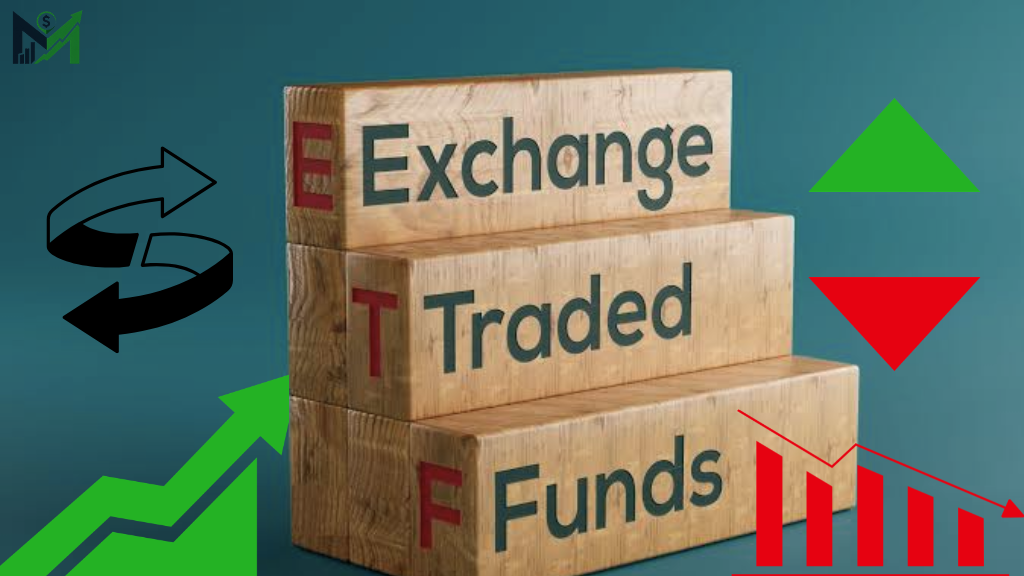
An exchange-traded fund, or fund commonly referred to as an ETF (Exchange Traded Funds), is a form of pooled investment that has a group of assets that include high dividend stocks, bonds, or commodities. This type of fund allows investors to purchase a share of numerous companies rather than a share of a single company. This is the reason why many individuals invest in this manner: They diversify their money across a number of holdings.
Imagine a basket! That basket may contain Apple, Amazon, Microsoft, and hundreds of other companies. If you purchase one share, you are buying a small piece of all that is in the basket. This will help you diversify your portfolio rather than investing everything in one firm.
This simply means that the shares are traded on the stock exchange just like the company stock itself. This is in contrast to older forms of pooled funds, which might just be purchased and sold at a definite price once a day. These baskets are traded on an exchange like any other listed stock, and their price fluctuates during the trading day as a result of supply and demand.
Such a fund first came into existence in the early 1990s and has since expanded into a multi-trillion-dollar industry. Today, there are thousands of choices available, with practically every aspect of the market available from large tech firms to small businesses, domestic stocks to global markets, gold bullion to government bonds.
What Is an ETF and How Does It Work?
With the concept figured out, let’s break it down and see how it works behind the scenes.
The Structure
Each exchange-traded fund has a company, called a fund provider or sponsor, that comes up with the idea and oversees its operations. Some of the biggest sponsors in the United States include Vanguard, BlackRock (which runs the iShares brand), and State Street (which runs the SPDR brand). The companies themselves determine the contents of the basket, in accordance with a goal or strategy outlined in the prospectus of the fund.
The vast majority of these types of funds are based on an index. Simply put, an index is just a list of published securities or other assets that are a certain portion of the market. One such index, for instance, is the S&P 500, which is composed of 500 of America’s largest publicly traded companies. The fund will mimic the S&P 500 by attempting to maintain the same holdings, in the same proportions.
Creation and Redemption
A special aspect of the working of this system is the “creation and redemption” process. Authorized participants are large financial institutions that have access to the sponsor and are tasked with issuing new shares or withdrawing shares from circulation. If there is an increased demand for a fund, the AP provides a matching basket of underlying securities to the sponsor for the creation of new shares. If demand decreases, they can repay the number of shares for the underlying holdings.
This background operation allows the market price to be kept in line with the actual value of the assets held within, commonly referred to as the net asset value or NAV. This balancing act makes it unusual for shares of these funds to be sold for an excessive amount or a little below the value of the securities they hold.
Trading on an Exchange
Shares are then offered for sale on a stock exchange (e.g., the New York Stock Exchange or the Nasdaq). Then, ordinary investors like you and me can purchase and sell them all day long via an ordinary brokerage account. One of the most significant benefits of this structure over older-style mutual funds is that it lets investors buy and sell shares throughout the trading day, rather than only once daily.
Types of ETFs
This way of investing has become hugely popular over the years, for one thing because there’s a fund available for pretty much every financial objective. Let’s look at the major categories that are available to American investors today.
Stock Funds
The Equity-focused baskets consist of a group of shares of companies. They can follow a wide index such as the S&P 500 or a narrower index such as technology, energy, or healthcare. Breadth investing is favored by those who want to get in on the market without having to zero in on a particular winner.
Bond Funds
Bond baskets consist of a handful of debt securities, or loans, issued by governments and/or corporations. They can be issued by the United States Treasury, companies, or municipalities. This is a favorite for investors who are looking for consistent income and less volatility than a more stock-heavy investment.
Commodity Funds
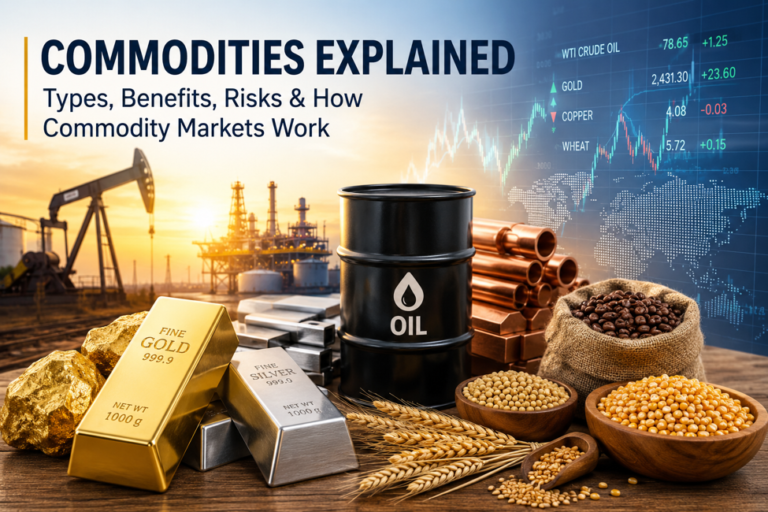
Commodity-based baskets offer an investment in a physical asset such as gold, silver, oil, or an agricultural product. An investor does not have to purchase and store physical gold bars, but can instead acquire shares in a gold-backed fund, which means that the investor has gold stored in a vault for them.
International Funds
International baskets enable investors based in the US to invest in companies outside the US. They may be developed markets such as the EU and Japan or emerging markets like India and Brazil. It is a good means of providing global diversification to a portfolio that is mostly domestic.
Sector Funds
These baskets are centered on a particular area of the economy, like technology, health care, financial services, or real estate. The category is used by investors in order to wager on the expansion of the industry in which they’re involved, but not to research each business that’s competing within it.
Dividend-Focused Funds
Dividend-focused baskets focus on companies that pay dividends regularly. This type of investment is favored by individuals who are seeking a reliable source of income, particularly retirees or those with retirement in mind.
Thematic Funds
Themed baskets are themed around a particular trend or a major concept like clean energy, artificial intelligence, or cybersecurity. It allows investors to invest in a business that they believe is going to be affected by a certain long-term change in the economy but on which they don’t place all their eggs.
Balanced Funds
Others mix stocks and bonds in the same fund to provide a mix of growth and stability for those who prefer not to have to juggle multiple separate stock and bond accounts.
ETFs vs Mutual Funds: What’s the Difference?
Many people mistakenly think that an Exchange Traded Funds (ETF) is similar to a regular mutual fund when they look at them on the surface. Both are pooled cars, which collect capital from a lot of investors to purchase a joint portfolio of possessions. There are some important distinctions, nonetheless, that should be understood.
Trading Flexibility
The key distinction will be in their trading methods. When an exchange-traded basket is traded, the shares of its exchange-traded units are traded on an exchange throughout the day, similar to the trading of ordinary shares. This means that the price may change at any time and you can trade when the market is open. A traditional mutual fund, on the other hand, is only priced once a day after the close of the trading market. The price you see when you place an order will be the price at the end of the trading day, regardless of when you placed your order.
Costs and Fees
An Exchange Traded Funds (ETF) typically has a lower expense ratio than an actively managed mutual fund. Most of the baskets just monitor an index, not any team of analysts picking stocks, so the operating expenses are lower, and that’s sometimes passed on to the shareholders, too.
Minimum Investment
Many mutual funds have a minimum amount you must pay into the fund in one lump sum, which may be a few hundred or even a few thousand dollars. On an exchange, however, shares may often be bought individually, and many brokers now offer fractional shares, which means that you can get a stake for as little as a few dollars.
Tax Efficiency
The tax efficiency of an Exchange Traded Funds (ETF) is typically superior to that of a typical mutual fund that pools all investors’ assets together. These baskets are likely to produce fewer capital gains distributions since their creation and redemption process is described above, which may lower the amount of taxes an investor must pay annually. Mutual funds are particularly liable to making frequent purchases and sales of securities, and investors may find themselves with taxable events such as redemption of securities, even if they didn’t sell any of those securities.
Management Style
The vast majority of the baskets currently on the market are “passively managed” ones that aim to perform on par with a benchmark. Mutual funds may be passively managed or actively managed, and an actively managed fund may cost more – it requires more research and decisions to make.
This Fund Structure vs Individual Stocks
Some new investors ask themselves, “What is the difference between an ETF and shares of a common stock?”
If you invest in one company’s stock, you are wagering on one particular company. The performance of your investment is dependent on the performance of that one company. Your investment will increase if your company is successful. When it doesn’t do well, your investment can lose a lot of value fast.
If you purchase a diversified basket, however, you are investing in multiple companies or assets in one fell swoop. This helps minimize your risk. A basket may have a poor performance from one holding but be compensated for by other holdings that are doing well. This automatic diversification is one of the key attractions of an ETF over picking individual winners, and is one of the reasons it is often seen as a more modest and palatable introduction to investing than doing so individually.
Another difference lies in the research. When choosing individual stocks, it is important to consider detailed financial information about the companies, industry trends, and management decisions. Much of that work has already been done for you as the fund automatically maintains a spread of investments based on its stated strategy with a diversified basket.
Advantages of ETFs
There are a few of the very largest reasons why ETFs have soared in popularity with American savers.
Diversification
This is the structure in which you can buy various companies or assets and have them in one purchase, as mentioned above. This minimises the dangers that can arise from investing just one thing into one basket, as it were.
Lower Costs
These types of funds tend to have a lower expense ratio than actively managed funds. Lower continuous fees over a long period of time can make a significant difference to your overall returns.
Easy to Buy and Sell
You can trade shares at any time of the day, just as you would for a conventional stock, since they are traded on an exchange. This provides you with a lot more flexibility and control over your own funds.
Transparency
The majority of sponsors will publish a daily list of holdings, so investors can see what they have at a particular time. This is in contrast to some mutual funds, which only disclose their holdings every three months.
Tax Efficiency
The underlying structure can lead to fewer taxable events, as mentioned above, which is beneficial for investors to maintain a higher percentage of their returns.
The ability to go through different Markets
For retail investors, an ETF can be an attractive way to access markets that may not be available directly, like foreign stocks, commodities, or bonds.
Low Minimum Investment
Many brokers nowadays trade fractional shares and allow you to start with a relatively small amount of money; thus, you can slowly accumulate a larger position over time.
Risks and Drawbacks of Exchange Traded Funds (ETF)
An ETF comes with numerous advantages, but remember it is not without its risks. As with all investments, there are some risks that should be recognized prior to investing real funds.
Market Risk
Many baskets are tied to the performance of stocks or a specific sector and if the overall market or sector does not perform well, the value of the basket may drop. Diversification will lower risk, but it will not eliminate risk.
Trading Costs
Many of the brokers that offer commission-free trading do, but some funds do have a bid-ask spread, or a tiny difference between the price that they are willing to pay to buy the fund and the price they charge to sell the fund. This slightly reduces your returns, particularly if you trade frequently.
Not all funds are created equal.
There are some that are very easy, while others are very complex; they might be leveraged or very specific. They are complicated products and can have considerably higher risk, not to mention not being suitable for those who are just starting.
Tracking Error
A fund can, at times, not match the performance of the benchmark it is trying to replicate. The gap is called tracking error and can occur for several reasons, such as charges, transaction costs, or the degree of match with the desired fund.
Overtrading Temptation
Shares are traded throughout the day, and with that, some investors are tempted to buy and sell too often, desperate to try and “time the market”. This attitude can cause bad choices and costs that detract from future benefits.
The Step-by-Step Guide to Buying Your First ETF
When you’re in a position to invest in one of these funds, this is a straightforward and easy-to-follow way to get started.
Step 1: Start a Brokerage Account
The only way to buy shares is to have a brokerage account. Some of the most popular choices in the U.S. are Fidelity, Charles Schwab, Vanguard,, and other mobile investing apps. Most of the platforms allow you to register an account online in just a few minutes, and many of them are free to register with.
Step 2: Fund Your Account
After opening your account, you must fund your account. This is generally accomplished by connecting your bank account and transferring it electronically, which usually takes 1-3 business days for it to clear.
Step 3: Do Your Research
Take time to do research before making a purchase. Review holdings, expense ratio, past returns, and investment philosophy to ensure that they align with your investment objectives and comfort level.
Step 4: Determine the amount to invest
Figure out the amount of money you are willing to invest. Many brokers today allow you to purchase fractions of stocks, so you can buy a little at a time and build up your confidence.
Step 5: Place Your Order
After you select a fund, buy it on your brokerage site. You are generally going to be at liberty to decide between a market order and a limit order, the former of which buys instantly at the market price, and the latter of which allows you to specify a specific price you are willing to pay.
Step 6: Monitor Your Investment
Once you’ve bought in, it’s important to regularly review if your holding is aligned with your financial goals. But don’t over-monitor, as it can cause stress or spur impulsive trading that ultimately may hurt long-term performance.
The most popular options for beginners are the following
If you are new to investing, here are some popular types of investments for the novice to get a head start:
- These are broad market index funds which are designed to mirror the S&P 500, which represents 500 of the biggest companies in the United States in a single investment.
- All market funds covering the U.S. stock market, including small, medium, and large companies.
- International index funds that give exposure to non-U.S. companies.
- Bond-centric funds with lower volatility and more consistent performance.
It is crucial to conduct your own research or speak with a certified financial advisor prior to deciding on any of these because it is essential that you make the choice that will most effectively suit your own financial needs and long-term objectives.
Learn about Fees: What Is an Expense Ratio?
When considering your choices, one key thing to keep in mind is the expense ratio. The annual fee that the fund charges for its operating expenses, as a percentage of your investment.
So, if the expense ratio is 0.05%, a fund would cost about $5 for every $10,000 invested, for a total of $50 a year. This might seem like a trivial expense, but it can make a real difference in returns over time and is particularly problematic for long-term investing, which is often done by a buy-and-hold investor.
On the whole, index options are extremely cheap, with expense ratios of as little as 0.03%. There may be higher fees on more specialized or actively managed options, typically ranging from 0.5% to 1% per year or more. When looking at your choices, consider the expense ratio in addition to other metrics such as performance, trading volume, and holdings.
Does This Type of Fund Make Sense for You?
Investors should consider whether an ETF is a suitable asset for their portfolio based on their investment objectives, risk tolerance, and length of time they plan to hold onto an asset. It’s an easy, low-cost option for many investors new to investing, and may provide a diversified portfolio without having to do it manually.
For long-term investing, the wide range of market choices may provide a good foundation for an investment portfolio or a retirement account. Perhaps, instead, you should consider options that pay dividends or bond options. And, if you’re interested in a certain industry or trend, a sector or thematic choice may match your interests.
It is essential to note that any investment involves risk and there is the potential to lose money. When making any financial commitment, think carefully about what you’re doing and research thoroughly, but if you need to, talk to a licensed financial advisor who can help you make the right call based on your specific situation.
The Average Investor’s Top Five Mistakes With ETFs
Though ETFs are a low-risk, easy-to-understand investment option for beginners, there are a few common mistakes that they make. Being aware of these can help you avoid costly errors early in your investing journey.
Chasing Recent Performance
A common error made is selecting an ETF based on prior year performance. Much like with other securities, investors risk the possibility of losing money in ETFs because their past returns are not indicative of future success, and chasing “hot” ETFs can mean purchasing at the peak just before a crash.
Failure to Respect The Expense Ratio
Some novice investors only consider past performance and neglect to look at the expense ratio. The fees may seem negligible but can cost thousands of dollars over the course of decades when you have substantial investments over a long period of time, and it’s always worthwhile to shop around.
Overlapping Holdings
When you have multiple ETFs, it is easy to get an excess of the same ETFs. For instance, if you have a US stock market fund and a technology sector fund, you might already be holding a lot of the same large tech stocks twice. Thus, the diversification benefit that you were hoping for is diminished.
Trying to Time the Market
Some investors are tempted to trade their ETFs frequently in an attempt to guess short-term price fluctuations because ETFs trade all day. This is a form of active trading that more often than not gives worse results than simply investing for the long term in a good mutual fund or ETF.
Not Understanding What’s Inside the Fund
Not all ETFs are “straightforward” broad-market ETFs. Others resort to using leverage, derivatives, or extremely low-risk trading methods. Always read the ETF’s fact sheet and prospectus before purchasing any shares to determine exactly what you are investing in.
ETFs and Retirement Accounts
Many people have ETFs in their retirement plans, including 401(k) plans and IRAs. These accounts can also be tax-advantageous, and pairing a low-cost, diversified ETF with them can be a good long-term tool for building wealth.
With a traditional IRA, contributions can be tax-deductible and your investments—such as any ETFs held—accumulate tax-deferred until retirement time. With a Roth, you put after-tax money into the account, and you may be able to withdraw qualified amounts without paying taxes when you retire–which means that any gains from your ETF investments might also be tax-free.
Many employer-sponsored 401(k) plans have begun to offer ETFs in addition to mutual funds so that employees have more choices and may enjoy lower fees. For long-term retirement investors, a diversified portfolio of simple broad market ETFs can provide a solid, low-maintenance investment base that has the potential to grow over many years.
Conclusion
Exchange-traded funds have transformed the way everyday Americans invest their money. By offering diversification, low costs, and easy access through the stock market, this style of investing has become a go-to choice for beginners and experienced investors alike.
Whether you’re just starting your investment journey or looking to diversify an existing portfolio, understanding how an ETF actually works is an important step toward making informed financial decisions. As with any investment, take the time to research your options, understand the risks involved, and consider speaking with a financial professional if you need personalized guidance along the way.
Frequently Asked Questions
Q – What does ETF stand for?
It stands for exchange-traded fund, a type of pooled investment that holds a collection of assets and trades on a stock exchange throughout the day.
Q – Is this type of fund safe to invest in?
While it offers diversification, which can reduce risk compared to owning a single stock, it is not completely risk-free. The value can rise or fall based on overall market conditions.
Q – Can I lose money?
Yes, like any investment, it is possible to lose money if the value of the underlying holdings decreases over time.
Q – How much money do I need to get started?
With many brokers now offering fractional shares and commission-free trading, you can begin with a relatively small amount, sometimes as little as a few dollars.
Q – Do these funds pay dividends?
Some do pay dividends, especially those holding dividend-paying stocks or income-generating bonds. These payments are typically distributed to shareholders on a regular schedule.
Q – What is the difference between this structure and a traditional index fund?
A traditional index fund can be either a mutual fund or an exchange-traded structure that tracks a specific market benchmark. The main difference comes down to how shares are traded, with exchange-listed shares moving throughout the day like ordinary stock.
Q – How are these investments taxed?
Shares held in a taxable brokerage account may be subject to capital gains tax when sold for a profit, along with taxes on any dividends received. Shares held inside tax-advantaged accounts, like an IRA, may follow different tax rules altogether.